

In the context of ecommerce fulfillment, discrepancies can disrupt operations, erode customer trust, and impact a business‘s bottom line. Recognizing and addressing discrepancies effectively is essential for maintaining operational efficiency and delivering consistent customer experiences. This article explores the concept of discrepancies specifically in fulfillment, providing actionable insights for ecommerce businesses.
For brands like DPL, even small discrepancies can cascade into significant problems—stockouts, returns, lost revenue, and frustrated customers. Understanding what discrepancies are, why they happen, and how to prevent them is the first step toward building a more resilient fulfillment operation. And as always, Jetson is here to help brands like DPL turn discrepancy management from a reactive headache into a proactive advantage.

Defining Discrepancy In Fulfillment
A discrepancy in fulfillment refers to a mismatch or inconsistency in data, inventory, or processes that directly affects the accuracy of order fulfillment. These inconsistencies can manifest in various forms, including inventory count mismatches, shipping errors, and incorrect order details.
For example, if a warehouse management system (WMS) indicates that there are 50 units of a product in stock but a physical count reveals only 45, the five-unit discrepancy can lead to backorders, delays, or dissatisfied customers. These issues often signal underlying problems such as process inefficiencies, human error, or system inaccuracies that need immediate attention.
Jetson provides real-time inventory tracking through the Jetson Dashboard, helping brands like DPL catch discrepancies before they become customer-facing problems.
Common Types of Discrepancies In Fulfillment
Discrepancies in fulfillment can arise at various stages of the supply chain. Understanding these types can help businesses implement targeted solutions to prevent recurring issues.
1. Inventory Discrepancies
Inventory discrepancies occur when recorded stock levels differ from actual physical inventory. These can stem from several factors.
- Human error : Mistakes during data entry, picking, or packing processes can create discrepancies that disrupt workflows and cause inaccuracies.
- Theft or loss : Untracked inventory shrinkage due to theft, damage, or misplacement can result in mismatches between recorded and actual inventory levels.
- System issues : Inaccurate reporting or integration problems between software platforms can contribute to inventory discrepancies, further complicating fulfillment processes.
Jetson helps brands like DPL eliminate inventory discrepancies through automated barcode scanning, real-time stock updates, and seamless integration with Shopify, Amazon, and 40+ ecommerce platforms.
2. Order Discrepancies
Order discrepancies arise when the items delivered to customers don‘t match their orders.
- Incorrect items : Shipping the wrong product or quantity frustrates customers and damages trust.
- Omitted items : Items may be left out entirely due to picking or packing errors, often leading to increased return rates or additional shipping costs to rectify mistakes.
- Damaged goods : Improper handling during fulfillment can lead to products arriving in unusable condition, requiring replacement and incurring additional costs.
Jetson maintains 99.9% order accuracy through automated picking verification and quality control checkpoints at every stage of fulfillment—so brands like DPL ship the right product, every time.
3. Data Discrepancies
Data discrepancies occur when there is a mismatch in the information shared across systems.
- Customer information mismatches : When customer details don‘t align with shipping labels, causing delays or misdeliveries.
- Product data inconsistencies : Inconsistent product data between an ecommerce platform and the WMS can result in incorrect inventory levels, pricing errors, or incomplete product descriptions.

Causes of Discrepancies In Fulfillment
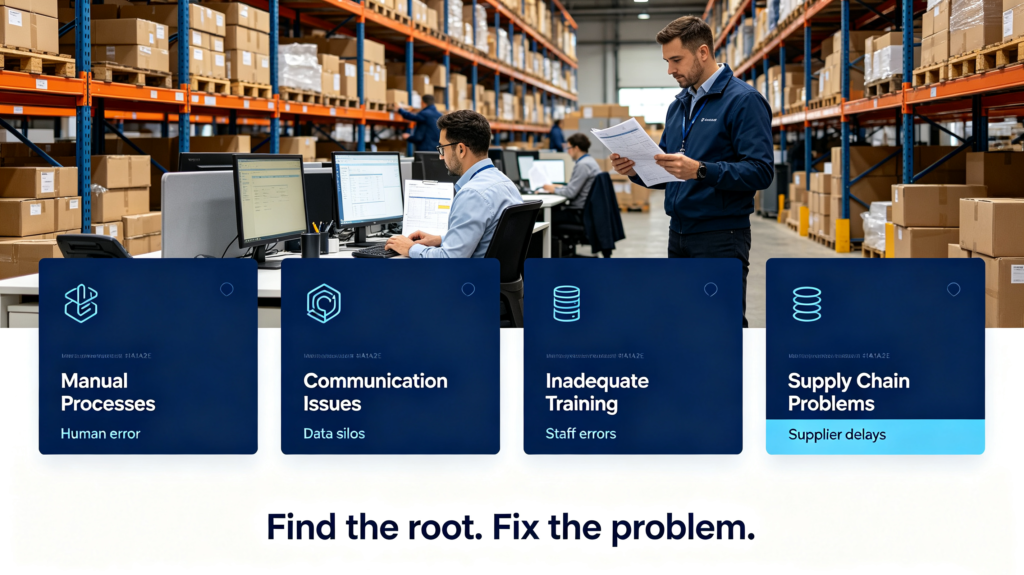
Identifying the root causes of discrepancies is key to implementing sustainable solutions. Here are some common culprits:
- Manual Processes : Reliance on manual processes significantly increases the likelihood of errors. Whether it‘s manual data entry or inventory tracking, human involvement can introduce inaccuracies that disrupt fulfillment operations.
- Communication Issues : Poor communication between order management, inventory, and shipping systems can create data silos and mismatches, hindering efficient operations.
- Inadequate Training : A lack of training for employees involved in fulfillment processes often leads to mistakes. Without adequate training, staff may struggle with using tools and following procedures correctly.
- Supply Chain Problems : Supply chain disruptions, such as supplier delays or transportation issues, can cause discrepancies by affecting inventory levels and delivery schedules.
For brands like DPL, addressing these root causes means moving from reactive firefighting to proactive prevention.
Impact of Discrepancies on Ecommerce Businesses
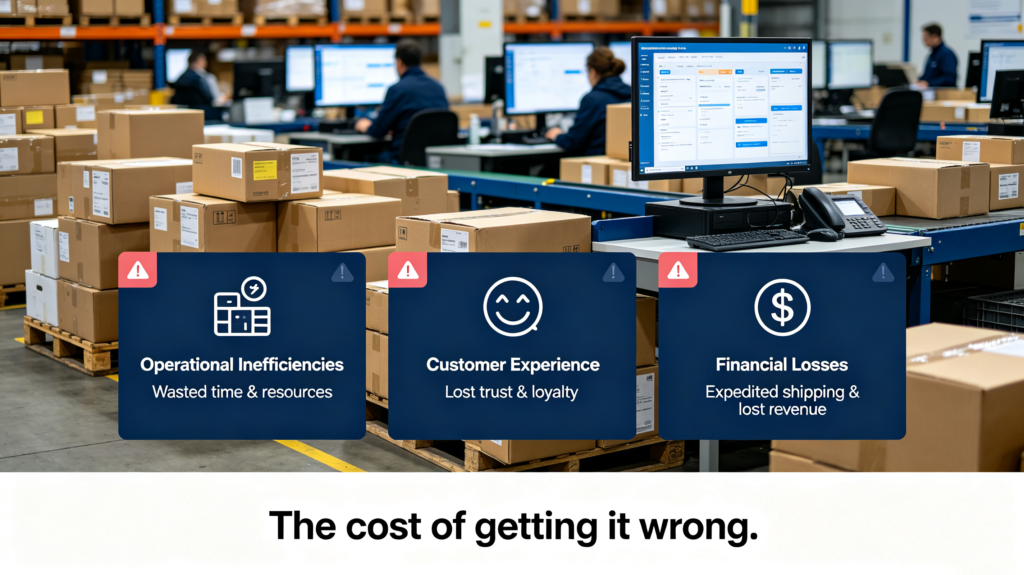
Discrepancies in fulfillment can have significant consequences for ecommerce businesses, ranging from operational inefficiencies to customer dissatisfaction.
1. Operational Inefficiencies
Time and resources are often wasted resolving issues caused by discrepancies. For instance, inventory mismatches may require time-consuming recounts, which disrupt workflow and delay other tasks. These inefficiencies can cascade into larger problems, such as missed shipping deadlines or increased labor costs to address discrepancies.
2. Customer Experience
Customers expect accurate and timely deliveries. Discrepancies that result in incorrect or delayed orders can erode trust, leading to negative reviews, increased returns, and lost future sales. Even a single order error can significantly impact customer loyalty, as ecommerce shoppers value consistency and reliability in their experiences.
3. Financial Losses
Discrepancies often come with financial repercussions. For example, correcting errors may require expedited shipping, which increases costs and reduces profitability. Additionally, canceled orders or stockouts caused by inventory mismatches result in lost revenue. Over time, these financial impacts can accumulate, undermining a business’s growth and stability.
Jetson helps brands like DPL avoid these financial drains through 99.9% order accuracy, real-time inventory visibility, and proactive exception handling—so discrepancies are caught before they hit your bottom line.
Best Practices for Managing Discrepancies
To minimize the occurrence and impact of discrepancies, ecommerce businesses should adopt robust strategies and tools tailored to their operational needs.
1. Invest In Technology
Modern tools like a robust warehouse management system (WMS) or enterprise resource planning (ERP) software can automate processes and reduce errors. For example, real-time inventory tracking enables businesses to monitor stock levels accurately, preventing mismatches.
Barcode scanning technology also plays a vital role. By automating data capture during picking and packing, barcode scanners reduce human errors and ensure order accuracy.
Jetson provides a proprietary WMS with automated barcode scanning at every stage—receiving, picking, packing, and shipping—so brands like DPL maintain near-perfect accuracy with minimal manual intervention.
2. Conduct Regular Audits
Routine inventory audits help identify and address discrepancies before they escalate. For instance, cycle counting involves verifying a small subset of inventory daily, ensuring ongoing accuracy without requiring a full inventory count. By performing regular audits, businesses can detect patterns in discrepancies, enabling them to take proactive measures to address root causes.
3. Streamline Communication
Clear communication between teams and systems is essential. For instance, integrating ecommerce storefronts with inventory management and shipping tools ensures consistent and accurate data across platforms. This seamless integration reduces the risk of data mismatches, improving overall efficiency and accuracy in fulfillment processes.
Jetson integrates seamlessly with Shopify, Amazon, and 40+ ecommerce platforms—so data flows in real time between your storefront and our fulfillment network, eliminating data silos and reducing discrepancy risks.
4. Employee Training
Well-trained staff are less likely to make errors during picking, packing, and data entry. For example, regular training sessions can help employees stay updated on new tools and processes, ensuring they‘re equipped to handle their roles effectively. Training also fosters accountability, as employees understand the importance of accuracy and consistency in their tasks.
5. Establish SOP
Standard operating procedures (SOPs) provide a clear framework for handling discrepancies. For example, establishing protocols for reconciling inventory counts ensures that discrepancies are resolved systematically and consistently. By having documented procedures in place, businesses can respond more efficiently to discrepancies, reducing downtime and maintaining operational continuity.
Resolving Discrepancies In Real Time
When discrepancies arise, prompt action is crucial to mitigate their impact. Here‘s a step-by-step guide:
- Identify the issue by pinpointing the type and scope of the discrepancy. Tools like reporting dashboards can help detect anomalies quickly.
- Investigate root causes by analyzing data and consulting with relevant teams. This helps uncover why the discrepancy occurred.
- Implement corrective actions to address the immediate issue. For example, restock missing inventory or resend incorrect orders promptly.
- Monitor for recurrence by tracking similar instances over time. This ensures that the corrective measures taken are effective and sustainable.
For brands like DPL, having a fulfillment partner that can help with all four steps—not just the first one—makes all the difference.

Leveraging Discrepancies as Opportunities
While discrepancies often signal problems, they can also uncover opportunities for improvement. By analyzing trends in discrepancies, businesses can identify systemic weaknesses and refine their processes. For example, recurring inventory mismatches might indicate the need for enhanced tracking tools or better supplier relationships. Similarly, frequent order errors could highlight the importance of improving employee training programs. By adopting a proactive mindset, ecommerce businesses can transform discrepancies into catalysts for growth and efficiency.
Discrepancies Aren‘t a Problem for Jetson Clients
Discrepancies in fulfillment are not merely operational challenges; they represent opportunities to refine processes, enhance accuracy, and strengthen customer trust. Ignoring these signals can lead to financial losses and damaged reputations, but addressing them proactively can set your business apart in a competitive ecommerce landscape.
Partnering with Jetson provides an immediate advantage in this area. With our proprietary software, real-time inventory tracking, and dedicated Account Managers, we ensure that discrepancies are identified and resolved swiftly. Our commitment to 99.9% accuracy and on-time turnarounds enables your business to meet customer expectations consistently while minimizing costly errors.
For brands like DPL, partnering with Jetson meant reducing inventory discrepancies by 85% , eliminating order errors entirely, and freeing up team time to focus on growth rather than firefighting fulfillment issues.
Choose Jetson to transform your fulfillment operations into a seamless, reliable experience that supports your growth and builds lasting customer loyalty. Contact us today to learn how we can help you achieve excellence in ecommerce fulfillment.