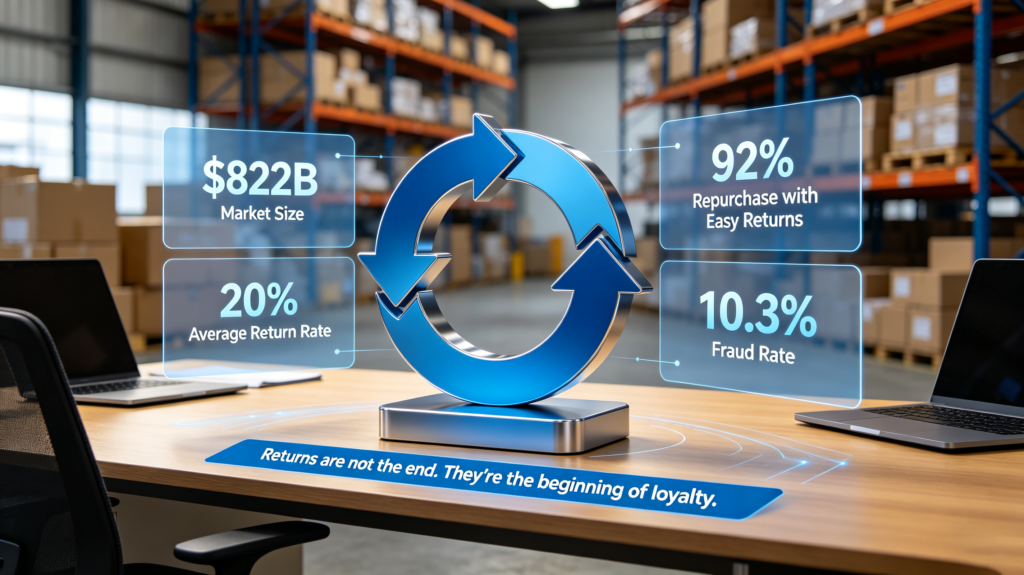
The reverse logistics market has grown from $773.4 billion in 2025 to $822.12 billion in 2026, at a compound annual growth rate of 6.3%. This growth is driven by the rapid expansion of e-commerce, rising product return volumes, and increasing consumer expectations for seamless return experiences. For brands like DDL, a growing e-commerce business, returns are no longer an operational afterthought—they are a direct driver of customer loyalty and long-term profitability.
E-commerce return rates now average 19–20.5% in 2026, with apparel and accessories routinely seeing 25–40% return rates and electronics hovering around 8–10%. Every return processed costs retailers between $10 and $20 per item, making efficient reverse logistics a margin-critical priority. This guide walks through the key steps to build an efficient reverse logistics operation in 2026. And as always, Jetson is here to help brands like DDL turn returns into retention—by providing scalable returns processing, real-time tracking, and value recovery solutions that keep customers coming back.
Step 1 : Choose Your Returns Processing Platform
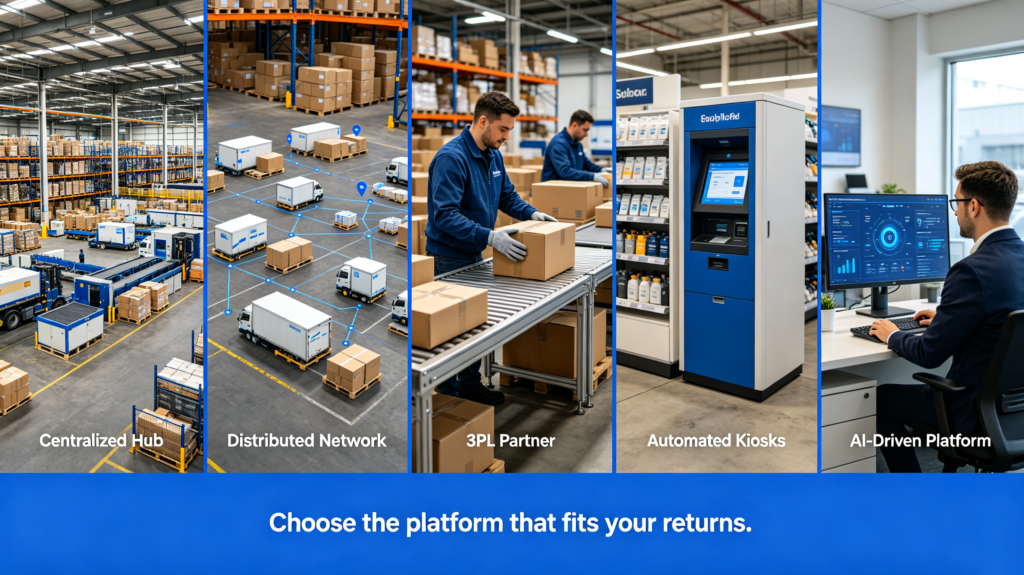
Choosing the right returns processing platform is fundamental to reverse logistics success. Each option offers distinct advantages that align with different return volumes, product categories, and customer experience goals. Here are the key returns processing platforms for brands like DDL to consider:
Centralized Returns Hub
A centralized returns hub consolidates all returned items into a single processing facility. This approach enables standardized inspection, grading, and disposition decisions, which are critical for maximizing value recovery. Industry leaders increasingly favor centralized return hubs combined with automated inspection and sorting to shorten the time to recover value.
Advantages : Standardized processing, economies of scale, consistent grading quality.
Challenges : Higher upfront investment, longer transit times for distant customers.
Distributed Returns Network
A distributed returns network places processing facilities closer to end customers. This model reduces transit time, accelerates refunds, and improves the customer experience. For brands with geographically dispersed customer bases, localizing returns processing can significantly reduce cycle time and preserve product value.
Advantages : Faster processing, lower transportation costs, improved customer satisfaction.
Challenges : Requires multiple facilities, harder to maintain consistent quality standards.
Third-Party Returns Management
Partnering with a third-party logistics provider that specializes in returns management allows brands to leverage established infrastructure and expertise. Many 3PLs now offer end-to-end returns solutions that integrate with existing e-commerce platforms and provide real-time visibility across the entire reverse supply chain.
Advantages : Established infrastructure, faster deployment, access to specialized expertise.
Challenges : Less direct control, potential for misaligned priorities.
Automated Returns Kiosks
Automated returns kiosks—increasingly deployed in retail locations, convenience stores, and lockers—allow customers to drop off returns without waiting for a carrier pickup. These systems capture return data at the point of drop-off, reducing processing time and improving data accuracy.
Advantages : Convenient for customers, faster data capture, reduced handling.
Challenges : Limited coverage, requires technology investment, not suitable for all product types.
AI-Driven Returns Platforms
AI-enabled returns platforms use machine learning to predict optimal disposition paths before an item even arrives at a processing facility. These systems calculate whether an item should be restocked, refurbished, or routed to secondary markets, minimizing handling costs and maximizing recovery value.
Advantages : Optimized routing decisions, reduced processing time, higher value recovery.
Challenges : Requires significant data infrastructure, integration complexity.
Other Options
- In-Store Returns : Allows customers to return online purchases at physical locations.
- Carrier Drop-Off Networks : Leverages existing carrier infrastructure for returns collection.
- Hybrid Models : Combining centralized and distributed processing based on product category and value.
Step 2 : Master the Returns Management Process
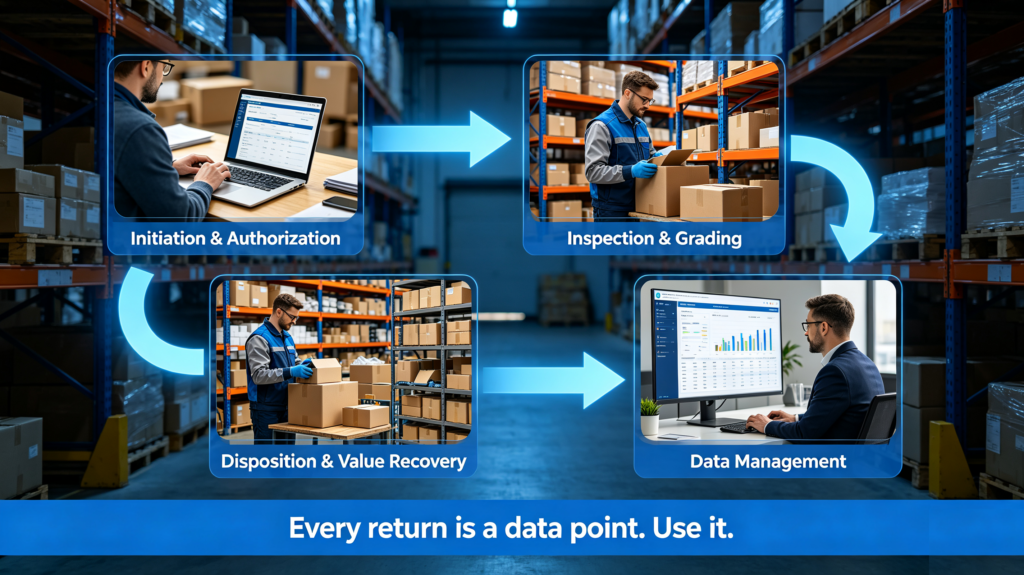
The returns management process involves several critical stages, each with its own operational requirements and data capture needs. For brands like DDL, mastering these stages is essential to reducing cycle time and recovering maximum value from every returned item.
Returns Initiation and Authorization
The process begins when a customer initiates a return through a self-service portal, customer service team, or retail location. At this stage, capturing the reason for return, product condition, and preferred resolution is critical. A return merchandise authorization (RMA) should be generated with a clear connection between the customer, order, item, reason code, and approved resolution.
Pro Tip : Offer multiple return initiation channels and provide clear instructions to reduce follow-up inquiries and accelerate the authorization process.
Inspection and Grading
Upon arrival at the returns processing center, each item undergoes inspection and grading. Standardized grading criteria ensure consistent decisions across all returned products. The grading outcome determines the final channel: restocking for resale, refurbishment, recommerce through secondary channels, or disposal.
Example : “Grade A – Like new condition, all accessories included – Direct restock. Grade B – Minor wear, packaging damaged – Route to recommerce. Grade C – Functional damage – Route to refurbishment.”
Disposition and Value Recovery
Based on the inspection and grading results, each item is routed to its optimal disposition channel. Modern reverse logistics operations use a value recovery hierarchy: Grade A items are restocked immediately, Grade B items are sold through certified pre-owned channels, and damaged items are either refurbished or harvested for parts.
For DDL, Jetson provides end-to-end returns processing solutions—including automated inspection, standardized grading, and AI-driven disposition routing that maximizes value recovery while minimizing processing costs.
Returns Data Management
Throughout the returns process, capturing and analyzing data is crucial for continuous improvement. Return reason codes, product condition data, and disposition outcomes can reveal patterns that inform product design, packaging improvements, and customer communication strategies. This data closes the loop between returns and forward operations.
Pro Tip : Share return insights with product development and quality teams to prevent future returns at the source.
Step 3 : Put Customer Experience First
Returns are a critical moment in the customer journey. A study by the Reverse Logistics Association found that 92% of consumers will buy again if the return process is easy, while 79% of those who had a poor experience say they would hesitate to purchase again. For brands like DDL, every return is an opportunity to build trust and loyalty.
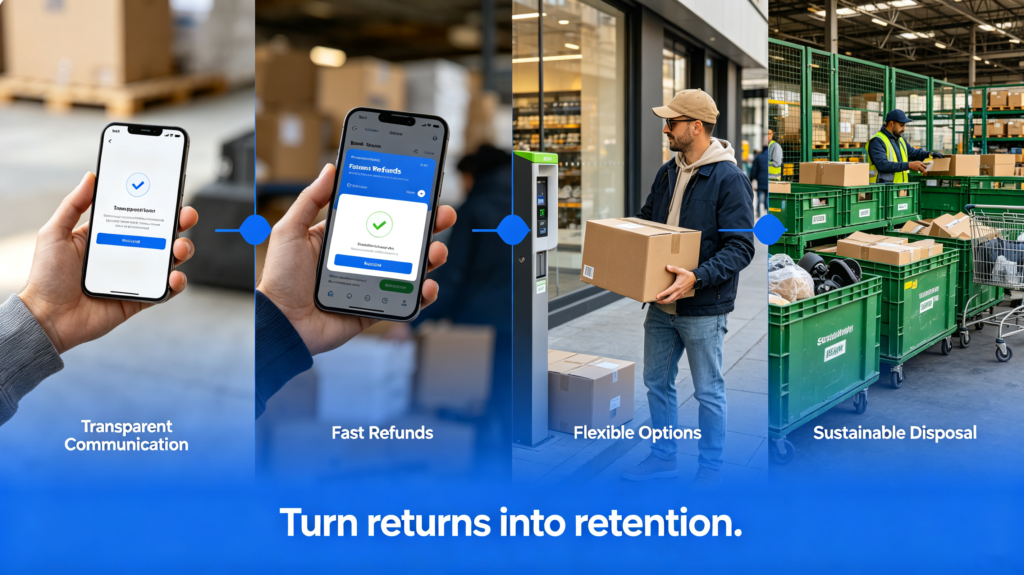
Transparent Communication
Every stage of the return—from confirmation email to refund notification—should be clearly communicated. Real-time updates such as “return received,” “quality check completed,” and “refund initiated” reassure customers and reduce inquiries to support teams. Transparency during the returns process directly strengthens brand trust.
Pro Tip : Provide proactive updates via email or SMS at each stage of the return journey to reduce customer anxiety and support tickets.
Fast and Fair Refund Processing
Speed matters. The longer a refund takes, the more frustrated the customer becomes. Timeliness, compensation, and convenience significantly enhance customer satisfaction, while compensation and a fair return policy positively influence trust. Automating refund processing where possible and setting clear expectations for refund timelines can turn a disappointing experience into a loyalty-building moment.
For DDL, Jetson provides customer-centric returns solutions—including real-time tracking, automated refund processing, and flexible return options that keep customers informed and satisfied throughout the entire returns journey.
Sustainability and Circular Value
Today‘s customers care deeply about sustainability. A return process that includes repair, refurbishment, or recycling sends a powerful message about environmental values. Brands integrating circular logistics report higher long-term customer satisfaction and lower overall logistics costs. Beyond customer perception, extended producer responsibility regulations in major markets now make companies legally responsible for the end-of-life of their products, making circular returns operations not just a nice-to-have but a compliance requirement.
Step 4 : Boost Efficiency with Technology and Data
With your returns platform, process, and customer experience in place, technology is the final pillar of an efficient reverse logistics operation. A strong technology strategy will reduce costs, accelerate processing, and unlock new revenue opportunities. Here are key tactics for brands like DDL :
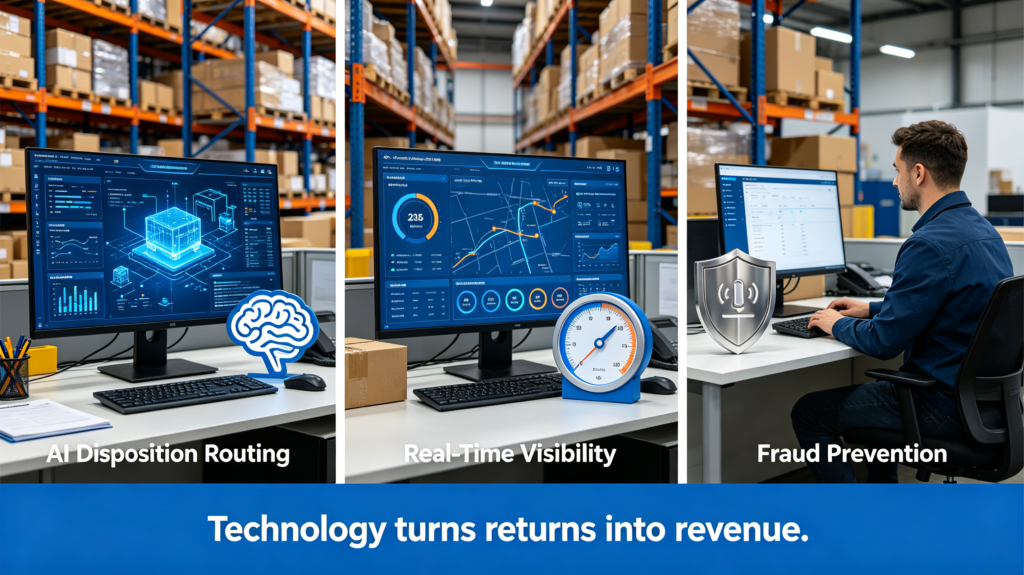
AI-Driven Disposition Routing
AI algorithms can predict the optimal disposition path for each returned item before it even arrives at a processing facility. By analyzing return reasons, customer history, and product data, these systems determine whether an item should be restocked, refurbished, resold through secondary channels, or recycled. This reduces handling costs and accelerates value recovery.
Real-Time Visibility and Tracking
Real-time tracking at the unit and scan level provides visibility across the entire reverse supply chain. This enables accurate business insights, faster decision-making, and better customer communication. When both forward and reverse operations share the same visibility layer, brands can optimize inventory allocation and reduce the time between return receipt and resale.
Returns Fraud Prevention
Returns fraud is a growing operating risk, with the average retailer seeing approximately 10.3% of returns as fraudulent. Implementing fraud detection tools—such as return pattern analysis, customer history checks, and serial number verification—can protect margins without penalizing legitimate customers. For high-value products, requiring a receipt or original packaging can significantly reduce fraudulent returns.
Building an Efficient Reverse Logistics Operation? Jetson Has Solutions for You
Building an efficient reverse logistics operation in 2026 offers significant opportunities for brands that treat returns as a strategic function rather than a cost center. By carefully selecting your returns processing platform, mastering the returns management process, prioritizing customer experience, and deploying effective technology and data strategies, you can turn returns into a competitive advantage.
For brands like DDL, success in reverse logistics requires the right partner to handle the complexities. Jetson provides end-to-end fulfillment solutions designed specifically for returns management—from automated inspection and grading to AI-driven disposition routing, real-time tracking, and fast, reliable refund processing. With Jetson, DDL can focus on delivering great products and marketing them to customers, while we ensure every return is processed efficiently and every customer stays loyal.
Choose Jetson to transform your reverse logistics operation from a logistical challenge into a loyalty engine. Contact us today to learn how we can help you build an efficient reverse logistics operation with confidence.