

Freight shipping is a vital component of the global economy, enabling businesses to transport goods efficiently while balancing costs. This guide aims to provide a comprehensive understanding of freight shipping, with a focus on how to do it inexpensively. Whether you are a small business owner or an individual looking to ship items, mastering these principles can lead to significant savings.
For brands like Grios, finding inexpensive freight shipping isn‘t just about cutting costs—it’s about building a logistics strategy that supports growth without sacrificing reliability. With the right approach and the right fulfillment partner, you can turn freight from a cost center into a competitive advantage. And as always, Jetson is here to help brands like Grios navigate the complexities of freight shipping with confidence.

What Is Freight Shipping?
Freight shipping refers to the process of transporting goods in bulk. It encompasses various methods, including road, rail, air, and sea transport. Understanding the core principles of freight shipping is essential for anyone looking to make informed decisions about how to send their products. The choice of shipping method can significantly impact delivery times, costs, and the overall efficiency of the supply chain. As global trade continues to expand, mastering the intricacies of freight shipping has become increasingly important for businesses of all sizes.
Types of Freight Shipping
Freight can be categorized into two main types : full truckload (FTL) and less-than-truckload (LTL) . FTL involves shipping large quantities, filling an entire truck, while LTL involves smaller shipments combined with others. Each method has its advantages, chiefly around cost, speed, and logistical considerations. For instance, FTL is often more cost-effective for larger shipments, as it allows for direct transport without the need for multiple stops. Conversely, LTL is ideal for businesses that may not have enough goods to fill an entire truck, allowing them to share transportation costs with other shippers.
In addition to the methods, understanding the weight and dimensions of shipments is vital. Pricing often hinges on these factors, with larger or heavier packages generally incurring higher shipping fees. Having precise measurements ready can help in obtaining accurate quotes. Furthermore, businesses should also consider the packaging of their products, as proper packing can not only protect goods during transit but can also optimize space within the shipping container, potentially reducing costs.
Key Terms In Freight Shipping
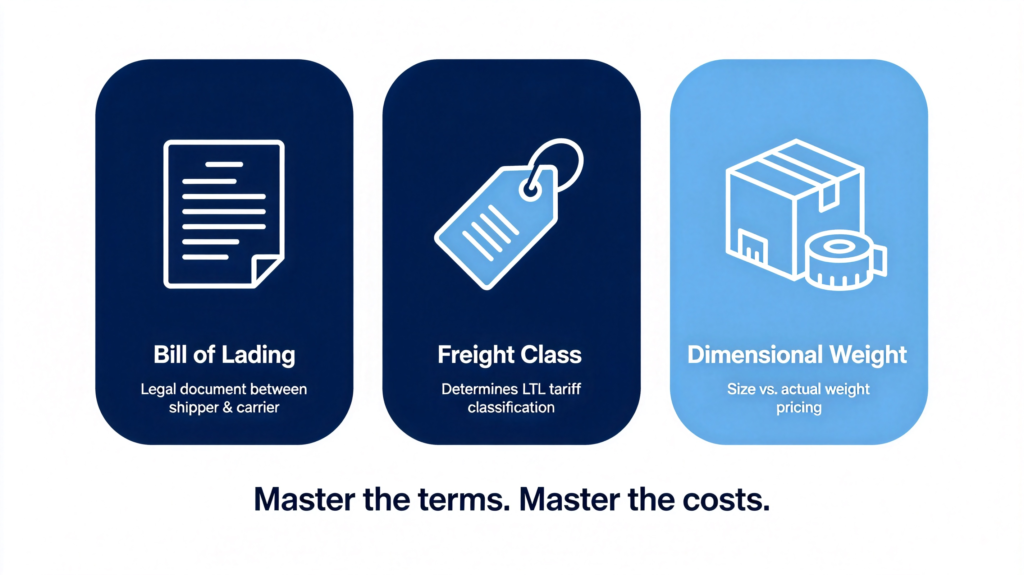
Familiarity with key terms can simplify the freight shipping process. Terms such as bill of lading, freight class, and dimensional weight are common in the industry. A bill of lading is a legal document between the shipper and carrier detailing the type, quantity, and destination of the goods being transported. This document serves as a receipt and can be crucial in resolving disputes, making it essential for shippers to ensure its accuracy. Freight class determines the tariff classification for LTL shipping, which can significantly influence costs. Dimensional weight, which takes into account the size of a package relative to its actual weight, can also affect shipping charges, especially when dealing with light but bulky items. Understanding these concepts can empower shippers to make strategic decisions about packaging and shipping methods, ultimately leading to more efficient logistics operations.
Jetson handles freight class determination and documentation management for brands like Grios—so you never overpay due to misclassification or incorrect paperwork.
The Value of Inexpensive Freight Shipping
Understanding how freight shipping affects overall business operations is vital for cost management. Shipping is often one of the highest expenses a business incurs, so finding inexpensive options is essential to maintaining profitability.
Impact on Business Operations
Cost-effective freight shipping not only benefits a company‘s bottom line but also enhances operational efficiency. When businesses save on shipping costs, they can allocate resources to other critical areas such as marketing, product development, and customer service. Efficient shipping also leads to quicker delivery times, improving customer satisfaction. Additionally, reduced shipping expenses can allow businesses to offer competitive pricing to customers. This is particularly true for e-commerce companies where delivery charges directly impact purchase decisions. Offering free shipping by incorporating it into the product price can act as an effective marketing tool.
Influence on Profit Margins
Pare down logistics costs and your profit margins can expand significantly. For instance, a company that ships thousands of packages a year can save substantial amounts by negotiating better rates or switching to more cost-effective methods. Even minor reductions in shipping costs can lead to improved profitability over time. Moreover, maintaining a balance between service quality and shipping expenses is crucial. Often, businesses focusing solely on cutting costs may resort to less reliable shipping methods, jeopardizing customer satisfaction. Both factors need careful consideration for long-term success.
Jetson helps brands like Grios strike this balance—reducing freight costs through intelligent carrier selection and volume discounts while maintaining 99.9% reliability.

Exploring Different Modes of Freight Shipping
The choice of shipping mode can have a considerable impact on costs and delivery times. Understanding the advantages of each method allows businesses to select the most suitable option for their needs.
Over-the-Road Shipping
Truck shipping remains the most common method for transporting goods domestically. It is favored for its flexibility and reach, allowing for door-to-door service. However, it can be costly, especially over long distances. For LTL shipments, using regional carriers may offer lower rates compared to national carriers. Companies should evaluate different trucking options to find the most cost-effective solutions that meet their requirements.
Jetson helps brands like Grios compare LTL and FTL options in real-time—automatically selecting the most cost-effective mode for every shipment.
Air Freight
When speed is a priority, air freight is the ideal choice, despite being more expensive than other options. It is often used for high-value or time-sensitive shipments. Businesses must balance the urgency of delivery against the costs associated with air shipping. Utilizing air freight can significantly reduce transit time, but it is essential to plan ahead and seek opportunities for bulk air shipping to cut costs. Building relationships with air freight carriers can also lead to better pricing and service modifications.
Ocean Freight
For international shipments, ocean freight is typically the most economical option, especially for large volumes. While it takes longer, the lower costs make it an attractive alternative for shipping bulky items. Businesses shipping internationally should account for factors such as port fees and customs duties, which can add to the total expense. Planning ahead and utilizing reputable logistics companies can help navigate these complexities efficiently.

Navigating Freight Shipping Regulations
Understanding both domestic and international shipping regulations is crucial to avoid delays and unexpected costs. Compliance with these regulations not only facilitates smooth transport but also builds trust with customers.
Domestic Regulations
In the United States, various regulations apply to freight shipping, ranging from safety standards to environmental considerations. Familiarity with the Federal Motor Carrier Safety Administration (FMCSA) regulations is essential for businesses involved in over-the-road shipping. Additionally, state-specific regulations often apply. Companies should ensure they maintain the necessary permits and adhere to weight limits to avoid fines or insurance issues while on the road.
International Regulations
Shipping goods internationally adds a layer of complexity, with customs regulations varying widely from country to country. Businesses must understand documentation requirements, tariffs, and import/export laws before shipping goods abroad. Engaging with specialists such as customs brokers can provide valuable guidance in navigating these regulations, ensuring a smoother shipping process and minimizing the risk of delays or fines.
Jetson works with a network of trusted customs brokers and provides automated documentation management—so brands like Grios stay compliant without the administrative burden.
Strategies for Inexpensive Freight Shipping
Employing various strategies can help businesses lower their freight shipping costs effectively. These methods not only save money but also enhance shipping efficiency.
Negotiating with Carriers
One of the most effective ways to lower shipping costs is through negotiation. Many carriers offer discounts based on shipping volume or long-term contracts. Building a good relationship with carriers can lead to better rates and service options. When negotiating, it‘s beneficial to provide detailed shipping forecasts and highlight consistent business. Knowing the market rates can also help during discussions. Utilizing freight brokers can simplify negotiations and often result in better deals due to their larger volume discounts.
Jetson aggregates shipping volume across hundreds of brands, securing exclusive carrier rates that individual brands like Grios could never access on their own. For Grios, this meant saving 18% on freight shipments from day one.
Consolidating Shipments
Combining multiple shipments into one can significantly reduce costs. This strategy is particularly useful for businesses receiving items from multiple suppliers. Instead of individual shipments, grouping them together can lower overall shipping expenses. Consolidating also helps in maximizing vehicle capacity, reducing the number of trips needed for transport. This not only saves on shipping costs but can also minimize the environmental impact of transportation.
Jetson helps brands like Grios consolidate shipments into cost-effective freight loads—reducing per-unit shipping costs by 30-50% on multi-item orders.
Optimizing Packaging
Efficient packaging can lead to direct cost savings. Reducing the size and weight of packages can minimize dimensional weight charges. Using lightweight materials while ensuring adequate protection for products helps improve shipping efficiency. Additionally, adopting standardized box sizes can streamline operations, as it simplifies the measurement and estimation process when getting quotes. Implementing these packaging strategies can lead to better freight rates and more effective inventory management.
For Grios, switching to right-sized packaging reduced dimensional weight charges by 22% on their largest SKUs—saving thousands annually without compromising product protection.

Inexpensive Freight Shipping Is Easy with Jetson
Mastering inexpensive freight shipping isn‘t just about finding the lowest rates; it’s about balancing cost, speed, and reliability. By leveraging options like freight consolidation, optimizing packaging, and comparing carrier pricing, you can keep your shipping expenses in check while maintaining high customer satisfaction.
Jetson specializes in finding cost-effective freight solutions for ecommerce businesses, no matter the shipment size. From intelligent rate shopping to freight consolidation to volume-based discounts, we help brands like Grios ship smarter—not harder.
Talk to our team to learn how Jetson can optimize your freight shipping and streamline your logistics strategy.
